
Nutrition / Clean Sport / Training
Creatine Monohydrate: Muscle, Strength, Recovery, Side Effects and Clean-Sport Risk
A practical long-form guide to creatine monohydrate, strength, muscle, recovery, dosing, side effects, women’s use, active aging, gummies and clean-sport supplement risk.
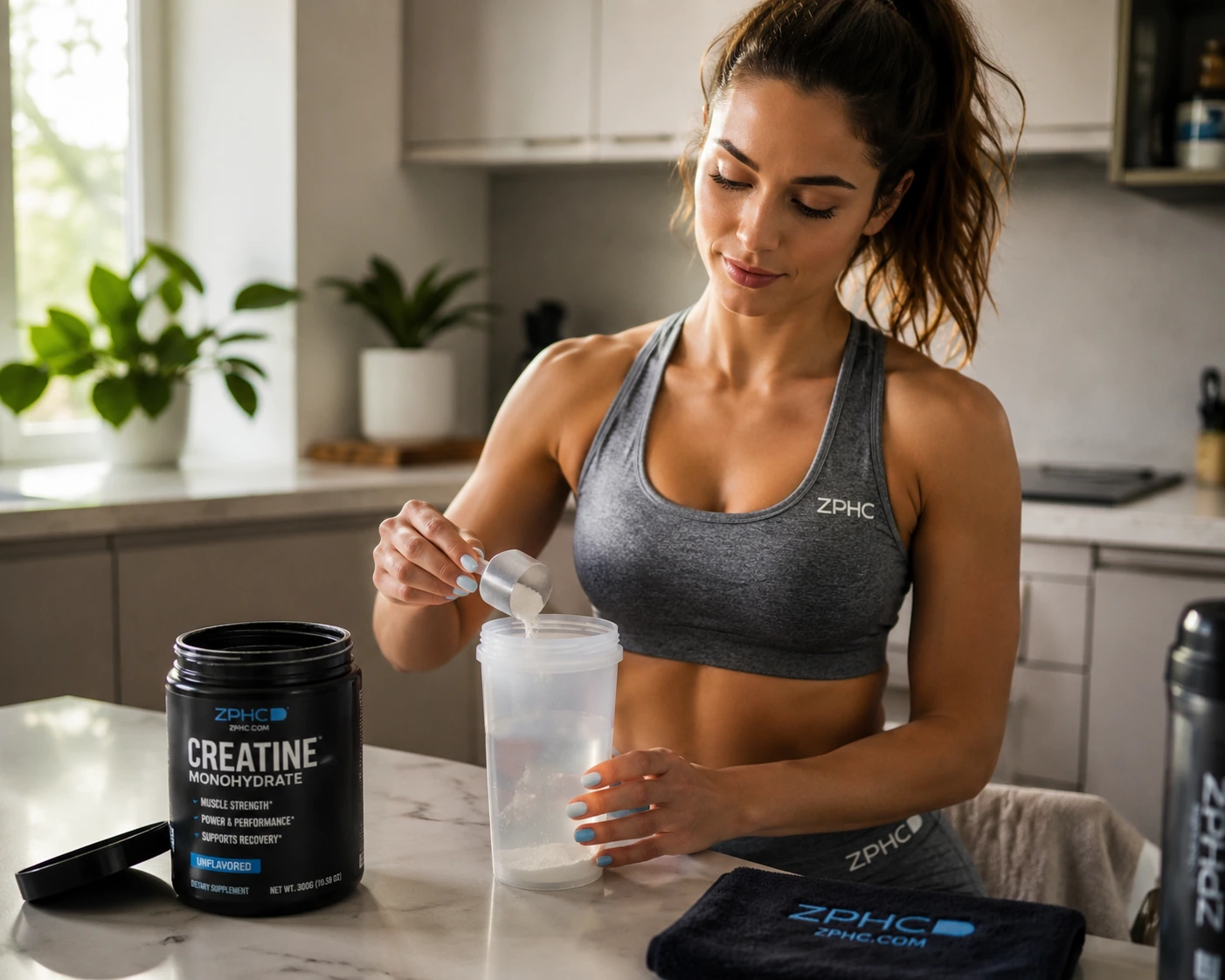
Creatine has become one of the most talked-about supplements in training, strength, women’s fitness, active aging and recovery. That attention is not random. It is one of the few sports supplements with a serious evidence base, a simple mechanism and a practical use case for people who train hard.
But popularity creates a second problem: bad information spreads faster than good information.
One person says creatine is essential. Another says it causes hair loss, kidney damage or dehydration. A supplement brand says its new gummy, capsule, liquid or “advanced absorption” formula is better than basic creatine monohydrate. A competitive athlete then has a different concern: creatine itself may not be prohibited, but what about contaminated supplements, misleading labels and anti-doping risk?
This guide gives a practical answer.
Creatine is not magic. It is not a steroid. It does not replace progressive training, protein, sleep, hydration or sensible recovery. But it is also not just another overhyped supplement. Creatine monohydrate is one of the most studied sports nutrition ingredients, and the strongest evidence supports its use for repeated short, high-intensity efforts such as lifting, sprinting, jumping and repeated power output. Operation Supplement Safety, a U.S. Department of Defense resource, states that creatine monohydrate is the most extensively studied creatine form and that it can support short, high-intensity exercise, strength performance and small increases in muscle mass when combined with resistance training.
This article is educational only. It is not medical advice, legal advice, anti-doping clearance, prescription guidance or individualized nutrition programming. Anyone with kidney disease, medical conditions, medication use, pregnancy, breastfeeding or competitive sport testing obligations should consult a qualified medical, sports nutrition or anti-doping professional before using supplements.
Why Creatine Is Popular Again
Creatine used to be marketed mostly to bodybuilders, strength athletes and young men chasing gym performance. That market still exists, but the newer demand is broader. More women are using creatine. More older adults are asking about it. More people using weight-loss medication are thinking about muscle preservation. More recreational athletes are trying to improve recovery and training consistency.
That makes creatine a useful topic for a modern training and clean-sport blog.
Fitness trend reporting for 2026 shows a shift toward longevity, healthy aging, women’s health, muscle preservation, recovery-first training and GLP-1-era strength programming. Creatine fits those categories because it is not only a “bigger muscles” topic. It also touches training quality, repeated effort, lean mass, older-adult strength and supplement-risk management.
The product market has also changed. Traditional creatine powder is still common, but newer formats such as gummies, chews, sachets, flavored powders and hybrid creatine products are growing. NutraIngredients reported that creatine gummy searches increased more than 1,300%, while Vogue Business reported strong growth in women and older-adult creatine purchasing, including a reported 200% year-over-year creatine sales increase at GNC.
The takeaway is simple: creatine is popular because the demand is real, but popularity does not guarantee product quality.
What Is Creatine?
Creatine is a naturally occurring compound made from amino acids. Your body produces creatine, and you also get some from foods such as meat and fish. Most creatine in the body is stored in muscle, with smaller amounts found in other tissues.
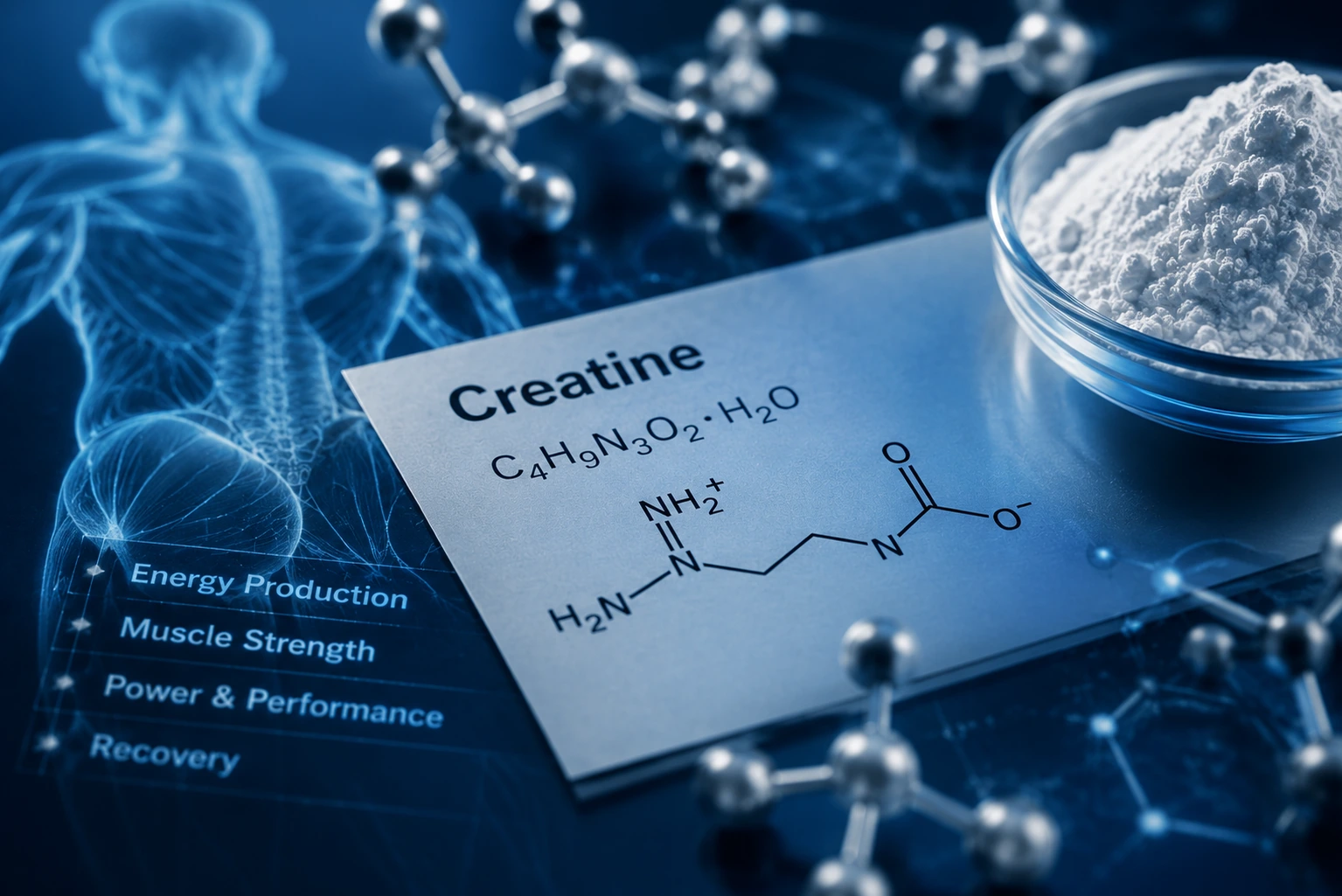
Creatine’s main role in performance is linked to the phosphocreatine system. During short, intense effort, the body needs rapid energy. Muscles use ATP for contraction, but ATP stores are limited. Phosphocreatine helps regenerate ATP quickly, supporting repeated bursts of high-power output.
In practical terms, creatine helps the body repeat hard efforts more effectively.
That matters for:
- Heavy resistance training
- Repeated sprint work
- Jumping and explosive drills
- Combat-sport exchanges
- Team-sport accelerations
- High-intensity interval training
- Repeated sets in the gym
- Power-based conditioning blocks
Creatine is not primarily an endurance supplement. OPSS notes that evidence does not show a clear benefit for aerobic endurance performance, and some studies have shown a decline in endurance performance. That does not mean endurance athletes can never use creatine, but it does mean the strongest performance case is short-duration, high-intensity work.
Creatine Monohydrate vs Other Forms
The supplement market loves complexity because complexity sells. Creatine monohydrate is simple, cheap and well-studied, so brands often try to make other forms sound superior.
You will see products labeled as creatine hydrochloride, creatine citrate, creatine ethyl ester, creatine malate, buffered creatine, liquid creatine, micronized creatine, creatine blends and creatine gummies. Some may be convenient. Some may mix better. Some may taste better. But better marketing does not equal better evidence.
OPSS states that creatine monohydrate is the most extensively studied form and that research supporting claims for other forms is limited. The Australian Institute of Sport is even more direct: it says around 99% of safety and efficacy data are available on creatine monohydrate powder, and there is no scientific reason to take a creatine supplement other than creatine monohydrate.
That is the clean, practical recommendation: for most people, plain creatine monohydrate is the default.
Micronized creatine monohydrate is not a different active ingredient. It is creatine monohydrate processed into smaller particles, usually to improve mixability. That may help texture, but it does not create a fundamentally different performance effect.
Gummies are more complicated. A gummy can work only if it contains an accurate dose, remains stable, and is made under serious quality controls. The format may improve convenience and consistency for some consumers, but gummies also introduce more manufacturing complexity, more additives and more risk of underdosing or misleading marketing. The smart consumer does not ask, “Is this gummy trendy?” The smart consumer asks, “Is this product accurately dosed, batch-tested and appropriate for my risk profile?”
What Creatine Can Actually Help With
Creatine’s main value is training output. It may help you perform more quality work in the types of training that depend on repeated short bursts of energy.

That can show up as:
- More total reps across hard sets
- Better repeated sprint quality
- Improved power output
- Better ability to repeat high-intensity efforts
- Greater training volume over time
- Small improvements in lean mass when paired with resistance training
OPSS reports evidence for creatine monohydrate in short, high-intensity exercise, strength performance under three minutes, and small increases in muscle mass when combined with resistance training. USADA also notes that creatine can increase muscle creatine stores and may enhance tasks requiring short bursts of power when combined with the right training, while emphasizing that the training program remains the key driver of success.
That last point matters. Creatine does not build muscle in a vacuum. It does not compensate for poor training, inconsistent effort, low protein, bad sleep or chaotic recovery. It works best as a support tool inside a proper system.
The system still comes first:
- Progressive resistance training
- Adequate protein intake
- Enough calories for the goal
- Sensible training volume
- Consistent sleep
- Hydration
- Deloads when needed
- Technique that allows progressive loading
Creatine can support the system. It cannot replace the system.
Creatine and Muscle Growth
Creatine is often described as a muscle-building supplement. That is partly true, but it needs precision.
Creatine does not directly stimulate muscle growth in the same way that resistance training does. Its value is indirect. By improving repeated high-intensity performance, it may allow better training quality, higher productive volume and stronger long-term adaptation.
There is also an early increase in body weight for many users. This is usually not fat gain. It is often related to water retention, especially inside muscle tissue. OPSS notes that people using loading doses may experience early weight gain due to water retention. USADA similarly notes that some people report short-term water retention, bloating and temporary weight gain.
This is where many people misread the scale.
A 1–2 kg increase after starting creatine does not automatically mean new muscle. It may be water. That does not make it bad, but it means the mirror, performance log, waist measurement and training progression matter more than the scale alone.
For physique goals, creatine should be judged by better training quality over weeks and months, not by the first few days of scale movement.
Creatine and Recovery
Creatine is sometimes marketed as a recovery supplement. That claim has some logic, but it should not be oversold.
OPSS notes that creatine may reduce immediate exercise-induced muscle damage, but more research is needed to determine the best amount and timing for recovery outcomes. That means creatine may be useful as part of a recovery strategy, but it is not a soreness cure and it does not override poor load management.
The best recovery stack is still boring:
- Sleep enough
- Eat enough protein
- Manage weekly training volume
- Use progressive overload instead of random intensity
- Take deloads before performance collapses
- Hydrate
- Walk and move between sessions
- Do not max out every week
- Do not confuse soreness with progress
Creatine can support performance and adaptation. Recovery still depends on the total stress-recovery balance.
Creatine for Women
Creatine is no longer only a male bodybuilding topic. Interest among women has grown because strength training, muscle preservation, menopause education, active aging and wellness performance are all moving into mainstream conversation.
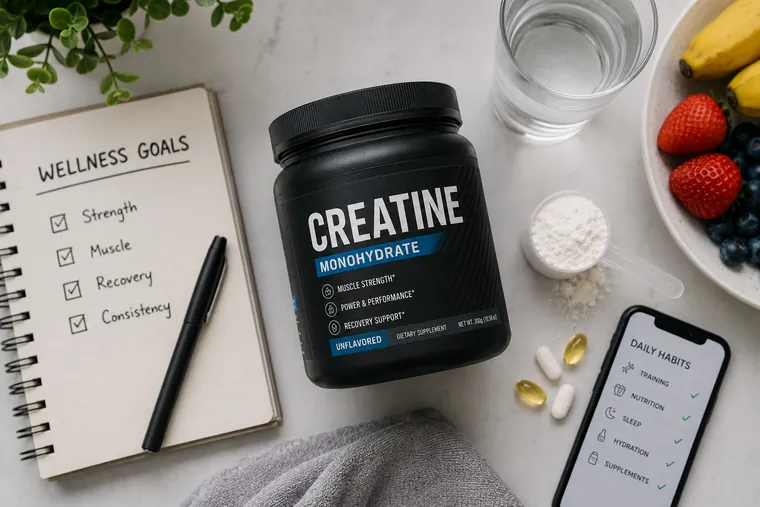
Vogue Business reported that women and older adults are now buying into creatine, and that some retailers have seen strong female purchasing in the active nutrition category. This is not surprising. Women train for strength, power, body composition, sport, healthspan and confidence. Creatine’s mechanism is not male-only.
The mistake is marketing creatine to women as a beauty hack or a glute shortcut. That is weak positioning. The stronger, more honest message is this: women who perform resistance training or repeated high-intensity exercise may benefit from the same basic creatine mechanism as men, but expectations should be realistic.
Creatine will not “tone” a body without training. It will not build glutes without progressive lower-body work. It will not replace protein. It will not fix poor recovery. It may support training quality and lean-mass goals when the fundamentals are already in place.
For women concerned about bloating or weight gain, the key point is that early scale changes are usually water-related, not fat gain. A lower daily maintenance approach may be more psychologically comfortable than an aggressive loading phase, especially for people who dislike rapid scale movement.
Creatine for Older Adults and Longevity
Creatine is also gaining attention in older adults because muscle and strength are not cosmetic issues. They are healthspan issues.
Aging is associated with gradual losses in muscle mass, strength, power and physical capacity. Resistance training remains the primary intervention. Creatine may be a useful adjunct when combined with training, particularly for strength and lean-mass outcomes.
The Australian Institute of Sport notes that creatine supplementation combined with resistance exercise improves resistance-training outcomes such as muscle strength, endurance and hypertrophy. NASM’s 2026 fitness trend analysis also identifies longevity and healthy aging as leading client goals, which makes muscle-preserving strategies increasingly relevant.
For older adults, the practical message is not “take creatine and avoid aging.” That is nonsense. The practical message is: lift progressively, eat enough protein, keep moving, protect balance and power, and consider whether creatine monohydrate may support the training plan under professional guidance.
Older adults with kidney disease, complex medical histories or medication considerations should not self-prescribe supplements casually. Safety screening matters.
Creatine During Weight Loss
Creatine is also relevant during fat loss, especially when people are trying to preserve strength and lean mass.
Weight loss often reduces body weight, but the quality of that weight loss matters. Losing fat while preserving muscle is a better outcome than simply making the scale lower. This is especially important for aggressive dieting, appetite suppression, high training loads or GLP-1-related weight-loss phases.
Creatine does not burn fat directly. It is not a fat-loss supplement. Its value during weight loss is indirect: it may help training performance, repeated effort and strength maintenance. When paired with resistance training and adequate protein, that may support lean-mass retention.
Do not use creatine as an excuse to ignore the basics. During fat loss, the core priorities are:
- A controlled calorie deficit
- Protein distributed across the day
- Resistance training
- Steps or low-impact activity
- Sleep
- Hydration
- Monitoring strength loss
- Avoiding crash dieting
Creatine may support training quality, but it does not replace nutrition discipline.
Creatine for Brain Health: Interesting but Not Settled
Creatine is increasingly marketed for cognition, brain energy, mood and focus. This is one of the fastest-growing marketing angles, but it requires caution.
OPSS states that there is not enough scientific evidence to confirm that creatine monohydrate improves cognitive performance in healthy adults. It also notes that creatine might help aged or stressed individuals, but more research is needed.
That is the correct tone: interesting, plausible, not settled.
For a healthy young adult with good sleep, good nutrition and low stress, creatine should not be sold as a guaranteed brain booster. For older adults, sleep-deprived individuals or specific clinical populations, the research conversation is more interesting, but still not a license for exaggerated claims.
A responsible article should not claim that creatine treats brain injury, depression, dementia, ADHD or any medical condition. Dietary supplements are not medicines, and medical conditions require professional care.
How Much Creatine Do People Usually Take?
| Approach | Typical educational range | Practical note |
|---|---|---|
| Maintenance | 3-5 g daily | Simple, slow and consistent for most recreational users. |
| Loading phase | About 20 g/day split across doses for 5-7 days | Faster saturation, but more digestive risk and not required for many users. |
| Timing | Any consistent time of day | Daily consistency matters more than pre-workout versus post-workout timing. |
The common maintenance approach is simple: 3–5 grams of creatine monohydrate per day.
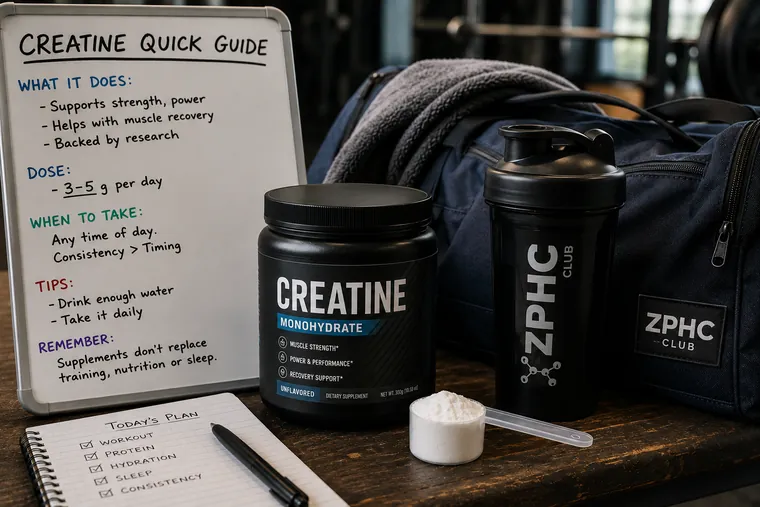
OPSS states that as little as 3 grams per day has been found safe and effective for increasing muscle creatine levels and supporting performance benefits, though effects may take time. The Australian Institute of Sport states that people may bypass loading and use 3–5 grams per day, reaching saturation over about four weeks.
A loading phase is optional. Traditional loading uses around 20 grams per day, divided into smaller doses, for 5–7 days, followed by 3–5 grams per day. OPSS describes this loading strategy but also notes that recent studies exploring different dosing routines often do not report major differences between loading and maintenance approaches, meaning more is not necessarily better.
For most recreational users, the maintenance approach is cleaner:
- Take 3–5 grams daily
- Be consistent
- Do not chase huge doses
- Give it several weeks
- Monitor body weight, digestion and training performance
- Use a simple product
- Avoid unnecessary blends
Competitive athletes should add one more rule: use only products that have been properly batch-tested for sport, and keep documentation.
Creatine Timing: Before or After Training?
Creatine timing is less important than daily consistency. The main goal is to saturate muscle creatine stores over time.
Some research and sport-nutrition practice suggest that taking creatine near training or with a meal may be practical. The Australian Institute of Sport notes that creatine uptake may be increased when taken with a meal containing protein and carbohydrate, and that taking creatine after exercise with a post-exercise meal is prudent advice, partly because it supports a consistent habit.
The practical answer:
Training day: take it after training with a meal or shake.
Rest day: take it with any meal.
Busy day: take it whenever you remember.
Sensitive stomach: take it with food and avoid large single doses.
Forgetful user: put it next to a daily routine.
The best timing is the timing you can repeat.
Does Creatine Cause Water Retention?
Yes, water retention is one of the most common early effects.
This is not automatically negative. Creatine draws water into muscle tissue as muscle creatine stores increase. That can increase body weight. Some people feel fuller. Some feel slightly bloated. Some notice no issue.
USADA notes short-term water retention, bloating and temporary weight gain in some users. OPSS also notes that loading doses may cause early weight gain due to water retention.
A practical way to manage this:
Skip loading if rapid scale gain bothers you.
Use 3–5 grams per day.
Take it with meals.
Hydrate normally.
Track waist, performance and photos, not just scale weight.
Give the body time to stabilize.
Water retention is not the same as fat gain.
Does Creatine Damage the Kidneys?
For healthy adults using standard doses, creatine is generally regarded as well tolerated. However, kidney concerns should not be dismissed casually.
Creatine can increase creatinine, a blood marker used in kidney function assessment. That can confuse interpretation. It does not automatically mean kidney damage, but people with kidney disease, abnormal kidney markers or medical risk factors should involve a clinician.
USADA notes that no long-term health risks had been reported with extended use up to four years, while still warning that some users report short-term effects and that supplements carry regulatory and contamination risk.
The conservative rule:
Healthy adult, standard dose, no medical issues: generally low concern.
Known kidney disease: medical supervision required.
Abnormal bloodwork: ask a clinician before use.
Medication use: check with a qualified professional.
High-dose use: unnecessary for most people.
Dehydration or heat stress: be more cautious.
Do not use creatine to self-manage a medical condition.
Does Creatine Cause Hair Loss?
The hair-loss claim is one of the most persistent creatine myths. It is usually linked to concerns about DHT, a hormone associated with androgenic hair loss in genetically susceptible people.
The practical evidence position is cautious: creatine has not been convincingly shown to directly cause hair loss in controlled research, but people already prone to hair loss may still worry about it.
A responsible statement is this: there is no strong reason to present creatine as a proven hair-loss cause, but anyone with significant concern should discuss it with a medical professional, especially if they already have hair thinning, hormonal conditions or family history.
Do not make the mistake of blaming every hair change on creatine. Hair shedding can be affected by genetics, stress, dieting, illness, thyroid issues, low iron, medication, low energy availability, rapid weight loss and poor sleep.
Does Creatine Cause Cramps or Dehydration?
Creatine is sometimes blamed for cramps, dehydration and heat problems. This claim is often overstated.
The more practical view is that creatine users still need normal hydration, electrolyte habits and intelligent training progressions. If someone begins creatine, increases training volume, trains harder, sweats more and ignores fluids, the problem may be the whole system rather than creatine alone.
USADA notes that some people report short-term water retention and that a potentially increased risk of compartment syndrome and muscle cramps has been reported. That means risk should be discussed honestly, not exaggerated and not ignored.
Practical guardrails:
Avoid extreme loading unless professionally justified.
Take normal daily doses.
Drink according to thirst and training conditions.
Replace electrolytes during long, hot or high-sweat sessions.
Do not suddenly spike training volume.
Stop and seek medical help for severe cramping, swelling, dark urine, severe weakness or heat illness symptoms.
Creatine and Anti-Doping: Is It Prohibited?
Creatine itself is not prohibited in sport. USADA states clearly that creatine is not prohibited.
But that does not mean every creatine supplement is safe for tested athletes.
The anti-doping risk is not usually the creatine molecule. The risk is the product: contamination, mislabeling, banned stimulants, undeclared substances, low-quality manufacturing or “proprietary blends” that hide ingredient quantities.
The International Testing Agency warns that labels using phrases such as “proprietary blend,” “extreme focus blend” or “testosterone boosting” are red flags, and that no supplement is 100% risk-free. USADA also warns that all supplements carry some level of anti-doping risk because contaminated products can reach store shelves under post-market regulation.
This is critical for competitive athletes. Under anti-doping rules, athletes are responsible for what is found in their body. “I did not know” is not a reliable defense.
Clean-Sport Supplement Checklist
Before using any supplement, especially as a tested athlete, ask these questions.
Is the supplement necessary, or can the goal be handled with food, training, sleep and recovery?
Is the product plain creatine monohydrate, or does it include stimulants, hormone claims, “test boosters,” fat burners, SARMs language, peptides language or proprietary blends?
Is the exact batch tested by a credible independent sport-certification program?
Can you verify the batch or lot number?
Can you keep the packaging, receipt, batch number and photos?
Is the product legal in your country, federation, workplace and sport?
Has a qualified sports dietitian, physician or anti-doping advisor reviewed the decision?
The ITA recommends that athletes first consider whether needs can be met with a food-first approach, seek expert advice, check labels for prohibited ingredients, understand contamination risk and consider only independently batch-tested supplements while keeping evidence of batch testing.
This is the clean-sport mindset: benefit is not enough. Risk must be managed.
Red-Flag Creatine Products
Avoid products that make loud promises and hide the details.
Red flags include:
- “Testosterone boosting” claims
- “Extreme strength” claims
- “Anabolic” language
- “Legal steroid” wording
- SARMs-related language
- Peptide-like claims
- Fat-burner combinations
- Stimulant-heavy blends
- Proprietary blends
- No third-party testing
- No batch number
- No clear creatine dose
- No manufacturer transparency
- No country-specific compliance information
- Fake “WADA approved” claims
The ITA states that WADA and anti-doping organizations do not endorse or approve supplements, and that products may falsely advertise safety or endorsement. That point should be repeated often: there is no such thing as a casually “WADA-approved supplement.”
Creatine Gummies: Smart Convenience or Marketing Trap?
Creatine gummies are popular because they are easy. They taste better than powder, travel well and feel less like a traditional gym supplement. For some users, convenience improves consistency.
But gummies should be judged harder, not softer.
A creatine gummy must solve three problems:
It must contain the stated amount of creatine.
It must keep creatine stable through manufacturing and shelf life.
It must avoid risky additives, misleading claims and contamination.
The format is not the issue. The quality control is the issue.
A good creatine gummy should clearly state the creatine form, dose per serving, number of gummies per serving, batch number, testing details and full ingredient list. For athletes, batch-tested sport certification matters more than taste.
If a gummy requires many pieces to reach an effective dose, it may become expensive, inconvenient or loaded with unnecessary sweeteners and additives. If the label is vague, skip it.
Plain powder remains the most practical default because it is cheaper, simpler and easier to dose.
Who May Benefit Most From Creatine?
Creatine may be worth considering for:
- People doing progressive resistance training
- Power athletes
- Sprint athletes
- Combat-sport athletes
- Team-sport athletes with repeated accelerations
- Recreational lifters trying to improve training quality
- People in muscle-preservation phases
- Vegetarians or people with low dietary creatine intake
- Older adults doing resistance training, under appropriate guidance
- Women using structured strength programs
- Athletes who can source properly batch-tested products
The Australian Institute of Sport notes that individuals with the lowest muscle creatine, such as vegetarians, may have the largest potential increase from supplementation.
Who Should Be More Cautious?
Creatine may require professional review for:
- People with kidney disease
- People with abnormal kidney markers
- People using medications that affect kidney function
- Pregnant or breastfeeding individuals
- People with complex medical histories
- People with eating disorders or scale-weight anxiety
- Minors
- Tested athletes
- People training in extreme heat
- People prone to severe cramping or unusual swelling
- Anyone using multiple supplements at once
Caution does not always mean “never.” It means do not guess.
Common Creatine Mistakes
The first mistake is expecting creatine to work without training. Creatine supports repeated effort. It does not create adaptation without a stimulus.
The second mistake is using too much. More is not automatically better. OPSS states that 3 grams per day can be effective and that loading is not necessarily superior to maintenance dosing in recent studies.
The third mistake is buying complicated blends. Plain creatine monohydrate is the evidence-based default.
The fourth mistake is judging it after three days. Creatine works through saturation and training support. The better question is how training looks over four to eight weeks.
The fifth mistake is panicking about scale weight. Early water retention is common and does not mean fat gain.
The sixth mistake is ignoring anti-doping risk. Creatine may not be prohibited, but contaminated supplements can still create serious consequences for athletes.
The seventh mistake is using creatine while the rest of the plan is broken. Poor sleep, low protein, random training and excessive fatigue will limit results.
How to Use Creatine With Training
Creatine works best when the training program gives it a reason to matter.
A useful strength plan should include:
- Progressive overload
- Compound lifts
- Stable technique
- Enough hard sets
- Enough rest between hard sets
- A clear weekly structure
- Planned recovery
- Exercise selection that fits joints and skill level
- Tracking of reps, load and performance
For hypertrophy, creatine is most useful when it helps increase quality training volume over time. That does not mean every set should be maximal. It means the athlete can perform more productive work while still recovering.
For power athletes, creatine may support repeated explosive efforts. That is useful only if sprinting, jumping, lifting or power drills are programmed correctly. Bad power training is still bad training.
For older adults, the emphasis should be safe progressive resistance training, balance, movement quality and consistency. Creatine is an accessory, not the foundation.
How to Use Creatine With Nutrition
Creatine does not replace protein.
For muscle gain, the nutrition plan still needs adequate protein, enough calories, micronutrients and meal consistency. For fat loss, the plan still needs a controlled calorie deficit and enough protein to protect lean mass.
A practical daily structure:
- Protein at each meal
- Carbohydrates around hard training when useful
- Fruits and vegetables for micronutrients
- Hydration across the day
- Creatine with a meal or post-training nutrition
- Consistent sleep schedule
- Limited reliance on supplement stacks
The Australian Institute of Sport notes that creatine uptake may be improved when taken with meals containing protein and carbohydrate, and that post-exercise creatine with a meal is practical advice.
What Results Should You Expect?
Realistic creatine outcomes are modest but useful.
You may notice:
- Slight body-weight increase
- Better ability to repeat hard sets
- Small strength improvements over time
- Better training volume tolerance
- Fuller-looking muscles
- Improved sprint or power repeatability
- Better consistency in high-intensity work
You should not expect:
- Instant muscle growth
- Direct fat loss
- Steroid-like results
- Guaranteed performance improvement
- A cure for soreness
- A cure for fatigue
- Guaranteed cognitive enhancement
- Protection from poor programming
- Protection from under-eating
- Anti-doping safety without product verification
USADA correctly emphasizes that not all athletes benefit from creatine and that the training program remains the key component of success.
A Practical Creatine Decision Framework
Use this framework before buying.
First, define the goal. Strength? Muscle? Sprint repeatability? Lean-mass support during weight loss? General curiosity is not enough.
Second, check the foundation. Training, protein, sleep and hydration should already be mostly in place.
Third, check health status. Kidney disease, abnormal bloodwork, medications, pregnancy, breastfeeding or medical complexity require professional review.
Fourth, check sport status. Tested athletes need batch-tested products and documentation.
Fifth, choose the simplest product. Plain creatine monohydrate is the default.
Sixth, use a conservative dose. For most adults, 3–5 grams per day is the standard maintenance range.
Seventh, track outcomes. Use performance, body weight, waist measurement, digestion, sleep, cramps and training logs.
Eighth, reassess after four to eight weeks. Keep what works. Stop what creates problems.
FAQ: Creatine Monohydrate
Is creatine a steroid?
No. Creatine is not a steroid. It is a naturally occurring compound involved in rapid energy production. It supports ATP regeneration during short, intense efforts.
Is creatine banned in sport?
No. USADA states that creatine is not prohibited. However, athletes still need to manage supplement contamination and mislabeling risk.
What is the best form of creatine?
For most people, creatine monohydrate is the best default because it is the most studied and usually the most cost-effective. OPSS and the Australian Institute of Sport both identify creatine monohydrate as the evidence-supported standard.
Do I need a loading phase?
No. Loading can saturate muscles faster, but it is not mandatory. A daily 3–5 gram maintenance dose can also increase muscle creatine over time.
How much creatine should most people take?
A common maintenance range is 3–5 grams of creatine monohydrate per day. OPSS states that as little as 3 grams per day can be safe and effective for increasing muscle creatine levels.
Should I take creatine before or after workout?
Consistency matters more than exact timing. Taking creatine after training with a meal is practical and may help build a routine.
Does creatine cause fat gain?
No. Early weight gain is usually water retention, not fat gain. Creatine does not contain meaningful calories when used as plain monohydrate powder.
Does creatine cause bloating?
Some people experience bloating or water retention, especially with loading doses or large single doses. A smaller daily maintenance dose with food may be easier to tolerate.
Does creatine damage kidneys?
Healthy adults using standard doses generally tolerate creatine well, but people with kidney disease, abnormal kidney markers or relevant medications should seek medical advice before use. USADA notes no long-term health risks had been reported with extended use up to four years, while still advising caution around supplement risks.
Does creatine cause hair loss?
There is no strong evidence that creatine directly causes hair loss. People with existing hair-loss concerns should discuss the issue with a qualified medical professional.
Can women take creatine?
Yes, women can use creatine. The mechanism is not male-specific. The key is matching creatine use to a real training goal and avoiding exaggerated beauty or “toning” claims.
Can older adults take creatine?
Older adults may benefit when creatine is combined with resistance training, but medical screening is important, especially with kidney concerns, medications or chronic disease.
Are creatine gummies effective?
They can be effective only if accurately dosed, stable and properly tested. Plain creatine monohydrate powder remains the simplest evidence-based default.
Can I mix creatine with coffee?
Many people do, but consistency and stomach tolerance matter more. Anyone sensitive to caffeine or digestive upset should separate them or take creatine with a meal.
Should I cycle creatine?
Cycling is not required for most users. The common approach is consistent daily intake.
What happens when I stop taking creatine?
Muscle creatine stores gradually return toward baseline. You may lose some water weight. Training progress built through actual strength work does not instantly disappear.
Bottom Line
Creatine monohydrate is not a shortcut. It is a useful support tool.
The strongest case is simple: creatine can help people performing repeated short, high-intensity exercise produce more quality work, and over time that may support strength, power and lean-mass outcomes. The evidence favors plain creatine monohydrate over expensive alternative forms. A daily 3–5 gram maintenance approach is enough for most users, while loading is optional.
The risks are also clear. Some users experience water retention, bloating or temporary weight gain. People with kidney disease or medical complexity need professional guidance. Tested athletes must treat every supplement as a risk decision, not a casual purchase. Creatine itself is not prohibited, but contaminated or mislabeled supplements can still create anti-doping consequences.
The smart position is not hype and not fear. It is disciplined use.
Train properly. Eat enough protein. Sleep. Hydrate. Choose plain creatine monohydrate. Avoid ridiculous claims. Use batch-tested products if sport rules matter. Track results. Keep the fundamentals in charge.
Creatine can help the system. It should never become the system.
References
- OPSS. “Creatine Monohydrate: Dietary Supplement for Performance.”
- Australian Institute of Sport. “Creatine.”
- USADA. “What Do Athletes Need to Know About Creatine?”
- International Testing Agency. “Supplements.”
- World Anti-Doping Agency. “2026 Prohibited List.”
- World Anti-Doping Agency. “The Prohibited List.”
- NSF Certified for Sport.
- Informed Sport. “Sports Supplements Certification.”
- Kreider, R. B., et al. “International Society of Sports Nutrition Position Stand: Safety and Efficacy of Creatine Supplementation in Exercise, Sport, and Medicine.” Journal of the International Society of Sports Nutrition.
- PubMed. “International Society of Sports Nutrition Position Stand: Safety and Efficacy of Creatine Supplementation in Exercise, Sport, and Medicine.”
- Mayo Clinic. “Creatine.”
- Cleveland Clinic. “Creatine: What It Does, Benefits, Supplements & Safety.”
- NASM. “Top Fitness Trends 2026.”
- ACSM. “The Future of Fitness: ACSM Announces Top Trends for 2026.”
- NutraIngredients. “Creatine Trends Driving New Market Growth.”
- The Vitamin Shoppe. “Health & Wellness Trend Report 2025.”
- Vogue Business. “How Gym Bro Favorite Creatine Became the New It-Girl Supplement.”
Editorial policy: CLUB ZPHC® Editorial Standards
Sources and review notes
Sources last checked: 2026-06-09. Scientific, medical and anti-doping references are used for health, safety and sport-status claims. Trend references are used only for context about current supplement interest and search demand.
To report a possible correction, use the official contact form and include the article URL and exact issue.
Corrections and updates
CLUB ZPHC® may update educational pages when sources, guidance, terminology, safety notes or internal editorial standards change.